

Avoid These Common Application Tape Mistakes for Cleaner Vinyl Transfers
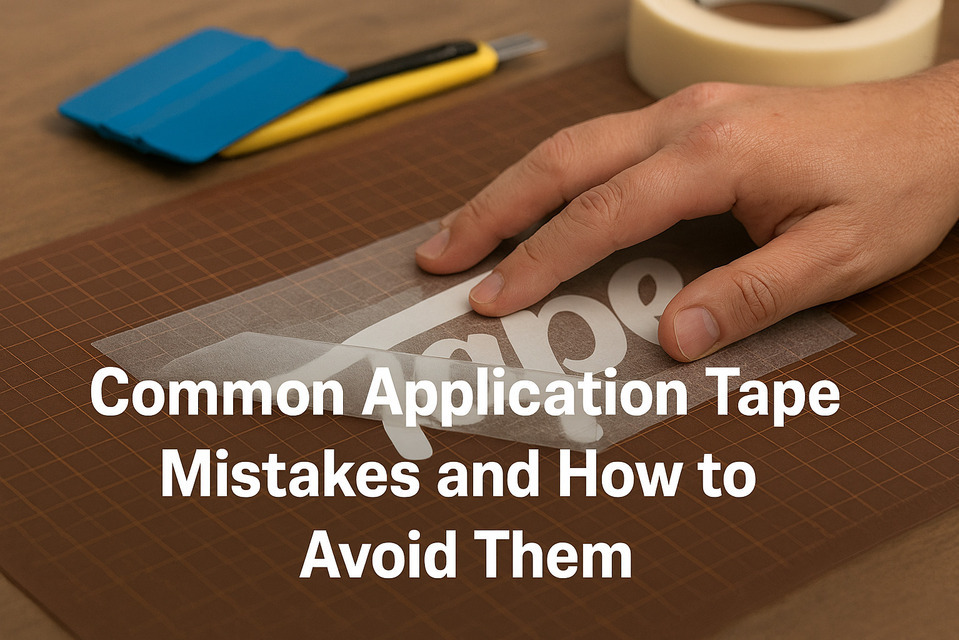
Common Application Tape Mistakes and How to Avoid Them
Application tape is essential for transferring vinyl graphics cleanly and accurately, but even small mistakes can lead to bubbles, wrinkles, misalignment, or wasted material. Whether you’re installing decals, signage, or layered graphics, avoiding the most common errors will help you achieve faster, cleaner, more professional results.
1. Using the Wrong Type of Application Tape
Choosing the wrong tack level is one of the biggest causes of poor transfers. Different vinyls respond differently, and mismatching tape to material can cause lifting or incomplete release.
Common issues:
- Low‑tack tape not lifting small or detailed cuts
- High‑tack tape pulling vinyl off the liner
- Tape not bonding to textured or specialty films
How to avoid it:
- Match tack level to the vinyl type (cast, calendered, matte, gloss, specialty)
- Use high‑tack for small lettering and intricate designs
- Use medium‑tack for most general signage vinyl
- Check manufacturer recommendations for specialty films
2. Not Applying Enough Pressure
If the tape doesn’t bond firmly to the vinyl, parts of the design may stay behind when lifting.
Common issues:
- Letters or fine details not lifting
- Uneven transfer
- Tape peeling back during installation
How to avoid it:
- Use a squeegee with firm, even pressure
- Work from the centre outward
- Re‑squeegee edges and corners before lifting
3. Trapping Air Bubbles Under the Tape
Air bubbles create wrinkles and distortions that can transfer into the vinyl during installation.
Common issues:
- Visible bubbles under the tape
- Creases forming during transfer
- Distorted graphics after application
How to avoid it:
- Lay the tape from one edge and smooth as you go
- Avoid dropping the tape onto the vinyl all at once
- Use a felt‑edge squeegee for smoother passes
4. Stretching the Tape
Pulling or stretching the tape can distort the vinyl underneath, especially on larger graphics.
Common issues:
- Warped shapes
- Misaligned layers
- Difficulty positioning the graphic
How to avoid it:
- Handle tape gently and avoid tension
- Support the tape with two hands
- Keep the tape flat and relaxed during placement
5. Removing the Tape Too Quickly
Rushing the removal process can cause lifting, tearing, or incomplete adhesion.
Common issues:
- Vinyl lifting with the tape
- Edges peeling
- Poor adhesion to the substrate
How to avoid it:
- Peel the tape back slowly at a low angle
- Apply light heat if the vinyl needs help bonding
- Re‑squeegee stubborn areas before lifting
6. Applying Tape to Dusty or Contaminated Surfaces
Contamination prevents proper adhesion and can cause bubbles or lifting after installation.
Common issues:
- Tape not sticking
- Vinyl lifting after installation
- Debris visible under the graphic
How to avoid it:
- Clean surfaces with isopropyl alcohol
- Avoid household cleaners that leave residue
- Use lint‑free cloths to prevent fibres
7. Reusing Application Tape
Reusing tape reduces tack and leads to inconsistent results.
Common issues:
- Poor lift on second use
- Uneven tack across the graphic
- Increased risk of misalignment
How to avoid it:
- Use fresh tape for every transfer
- Store tape rolls properly to maintain tack
Key Takeaways
- Match the tape’s tack level to your vinyl and project type.
- Apply firm, even pressure for a clean lift.
- Avoid stretching the tape or rushing removal.
- Keep surfaces clean and free from dust or residue.
Avoiding these common mistakes will help you achieve cleaner transfers, faster installs, and more professional‑looking results every time
https://www.creativegraphicsupplies.com.au/product/application-tape-r-tape